
News
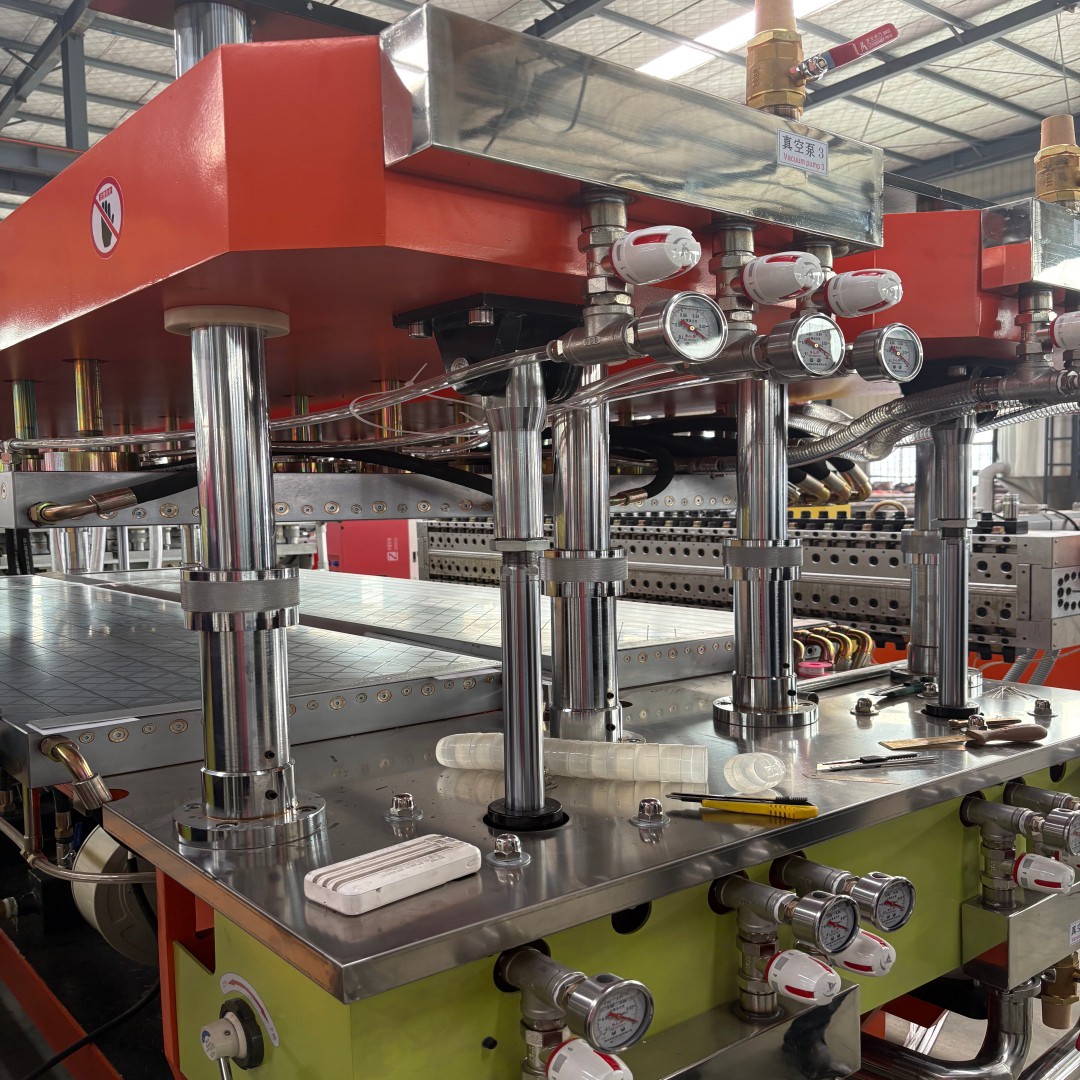
Sheet warpage and inconsistent shrinkage are common quality issues in plastic sheet extrusion production. Many manufacturers tend to attribute sheet distortion to raw material problems at first sight. They immediately replace materials or adjust formulas and conduct repeated sampling tests. This practice not only consumes large quantities of raw materials and delays production schedules, but often fails to eliminate the distortion defect.
The core cause of sheet warpage lies in the difference in shrinkage rate across different areas of the sheet. Uneven cooling during forming or insufficient calibration after exiting the production line leads to inconsistent shrinkage rates in the machine direction and cross direction, resulting in warpage. In simple terms, when one side of the sheet cools faster than the other, the warmer side shrinks with a delay, and the sheet bends toward the hotter side.
From the perspective of on-site production, unbalanced cooling is mostly an equipment and process issue. Uneven layout or blockage of water circuits in the calibration table, inconsistent water flow, as well as unstable extrusion thickness and output speed will directly cause uneven heat dissipation on both sides of the sheet and trigger warpage. Such problems have nothing to do with raw material quality. They can be effectively improved by overhauling water circuits, optimizing the calibration system and stabilizing the extrusion process.
Meanwhile, formula factors can also lead to sheet warpage. An improper filler ratio will change the inherent shrinkage characteristics of the material. Even with a well-balanced cooling system, the finished sheet is still prone to deformation after cooling and calibration. Nevertheless, the formula is a secondary factor and should not be checked first.
Practical industry recommendation: establish an orderly troubleshooting workflow once sheet warpage occurs. Prioritize checking the cooling system and discharge balance to eliminate hidden equipment and process risks one by one. Only after confirming stable equipment conditions and proper process parameters should you evaluate and optimize the filler formula system.
Following the troubleshooting logic of equipment first, formula second helps locate the root cause step by step. It avoids material waste caused by blind material trials, shortens the troubleshooting cycle, assists sheet producers in stabilizing finished product quality and cutting production costs.
Navigation
- Source of Sheet Warpage: Distinguish Between Equipment Process and Raw Material Formula to Efficiently Solve Extrusion Production Challenges
- PP Hollow Grid Board Extrusion Line Unveiled for Sustainable Packaging and Construction
- Fully Automatic PP Hollow Grid Board Extrusion Line | Coroplast / PP Hollow Sheet Machine for Packaging & Construction Formwork
- PP Corrugated Sheet Machine Delivers Versatile, Recyclable Twin-Wall Plastic Boards for Global Industries
- PP Hollow Corrugated Sheet Machine
- PP Hollow Corrugated Sheet Extrusion Line | Reliable PP Honeycomb Board & Hollow Grid Panel Making Machine
Send Us A Message
Send Your Inquiry
We welcome your cooperation and we will develop with you.